


 Palatability
Ruminants are choosy eaters
Make sure precisely formulated diets are readily eaten.
Ruminants are far more sensitive to smell and taste than people are. Adisseo palatability products are built on more than 50 years of experience, giving nutritionists a tool to make sure their diets are eaten.
Each product is designed for a specific stage of the production cycle, to stimulate appetite and feed intake and give ruminants of every age the best start and the best performance throughout life.

Dairy AP®
A spicy red fruit appetite stimulant for robotic milker pellets
Dairy AP® is an appetite stimulant for dairy feeds, especially the pelleted feeds used in robotic milkers. Pellet palatability is a major factor in how regularly and how often cows visit the robot.
- Attracts cows to the robotic milker
- More milkings per day
- More frequent robot visits
- Fewer "fetch cows" that must be brought to the robot by hand
- Speeds up the learning process
- Better daily use of the milking unit
- Excellent stability for pelleting

| Flavor profile | Mixed red fruit |
|---|---|
| Form | Dry |
| Usage rate | Robotic milker pellets: 1–1.5 lb/ton |
How the flavor works
Highly enticing aroma
- Improves diet palatability
- Positive taste and aroma
- Draws the cow to the robotic milker
Consistent target intake
- Better, more consistent feed intake
- Motivates the cow to eat at regular intervals
- Encourages her to eat her concentrate in the robot
Flexible formulation
- Masks less palatable ingredients
- Gives more flexibility in diet formulation
- Stable through pelleting
What happened when the flavor went in
More milkings and more voluntary robot visits


Find the right flavor for each life stage
Each flavor profile is matched to the feed it goes into.
Dry Calf ADE
Milky coconut with fruit-like top notes; sweetener and enhancer
Usage: Milk replacer: 1–2 lb/ton · Grain mix: 1–2 lb/ton
Dry Dairy Krave
Licorice and citrus
Usage: Grain mix: 1–2 lb/ton
Caramel ADE
Caramel
Usage: Grain mix: 1–2 lb/ton
Dry Dairy Krave 400
Anise, cinnamon and wintergreen
Usage: Grain mixes, minerals, buffers, protein supplements: 1–2 lb/ton · Pelleted: 2 lb/ton
Dry Dairy AP
Mixed red fruit
Usage: Robotic milker pellets: 1–1.5 lb/ton
Dry Maple ADE
Maple
Usage: Grain mixes: 1–2 lb/ton
Liquid Blackstrap Cane Molasses
Cane molasses
Usage: 1–2 lb/ton
Dry Special Anise
Anise-like aroma
Usage: Grain mix and minerals: 1–2 lb/ton
Typical usage rates. Ask your Adisseo representative about the right rate for your formulation.
Flavor charts for other species: Sheep & goats · Equine · Swine
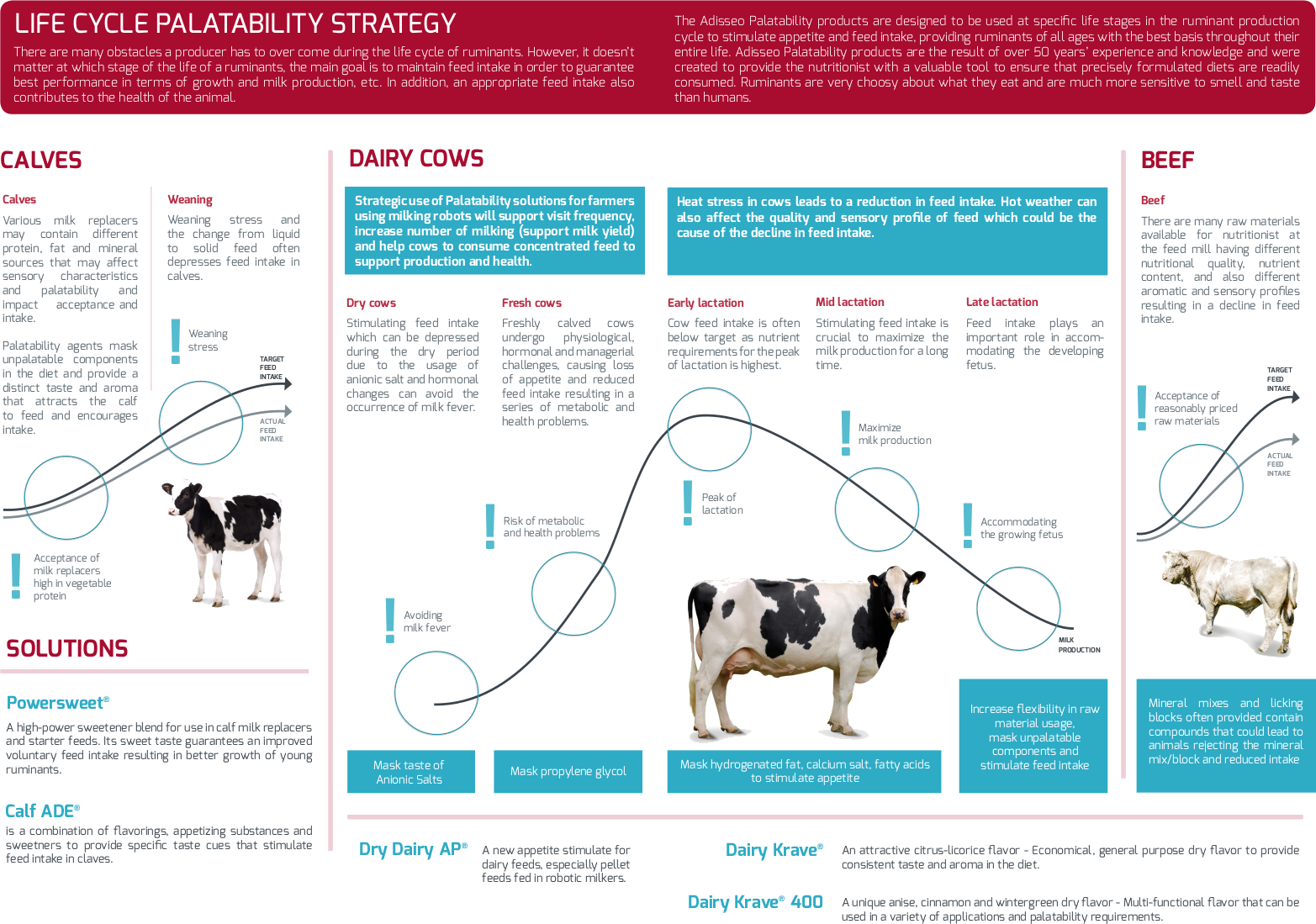
A palatability strategy for every stage
Whatever the stage, the goal is to keep feed intake up for the best growth and milk production.
Calves
- Milk replacer proteins, fats and minerals can hurt acceptance and intake
- Weaning stress and the switch to solid feed depress intake
- Flavors mask off-notes and give a familiar taste cue that draws the calf to feed
Dairy cows
- Dry cows: anionic salts can depress intake and raise milk fever risk
- Fresh cows: hormonal changes reduce appetite
- Early and mid lactation: intake has to keep up with milk
- Heat stress and robot visits both depend on an appealing feed
Beef
- Many raw materials have low palatability
- Mineral mixes and lick blocks need flavor to encourage intake
- A consistent aroma helps keep intake steady when ingredients change
Helping Nutrition Happen
Adisseo's palatability experts explain how flavor drives intake.

An introduction to palatability
Ab Greven, Category Manager for Palatability, on more than 50 years of Adisseo solutions that encourage voluntary feed intake.
Watch the Video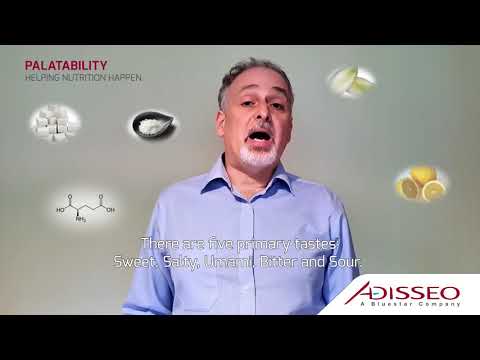
Fundamental principles of palatability
Simon Eskinazi on how a feed's smell, taste and after-effects shape what animals accept and eat.
Watch the Video
Palatability in ruminants
Sébastien Chaboche on why ruminants reject bitter and sour feeds and accept salty and sweet ones.
Watch the Video


Make every ration one they want to eat.
Talk with your Adisseo representative about the right flavor and rate for your calf, dairy or beef feeds.