


Butterfat Prices Continue to Fall. What are Milk Protein Prices Doing?

Butterfat Prices Continue to Fall. What are Milk Protein Prices Doing?

The prior post showed that the producer price of butterfat is continuing to fall.  This post will cover the most recent price trends for milk protein.  If both butterfat and milk protein prices are falling, producers will be scrambling for survival.  The protein price is dependent on the wholesale cheddar cheese price and the butterfat price.  When the cheese price goes down, the price of milk protein goes down.  When the butterfat price goes down, the price of milk protein goes up.  The formula for the protein price is listed below. 

Protein Price = ((Cheese Price – 0.2519) × 1.383) + ((((Cheese Price – 0.2519) × 1.589) 

– Butterfat Price × 0.91) × 1.17)

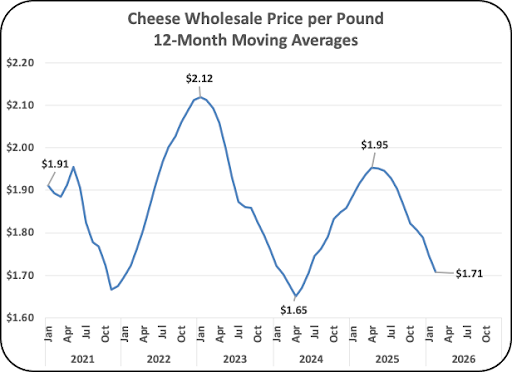
The butterfat declining price improves the milk protein price, however, as shown in Chart I below, the cheese price is also declining which will lower the price of milk protein.  The 12-month moving average price for cheese is at the lowest price since mid 2024.  In January 2026 the monthly price of cheese was $1.40 per pound, the lowest price for any month in the years covered in Chart I.

Chart I – Wholesale Price of Cheddar Cheese

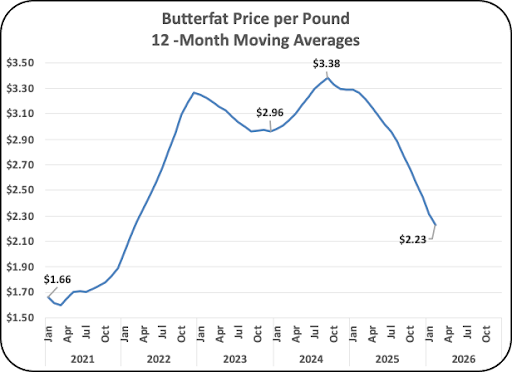
The butterfat price is shown in Chart II below.  Details were covered in the prior post.

Chart II – Butterfat Price per Pound

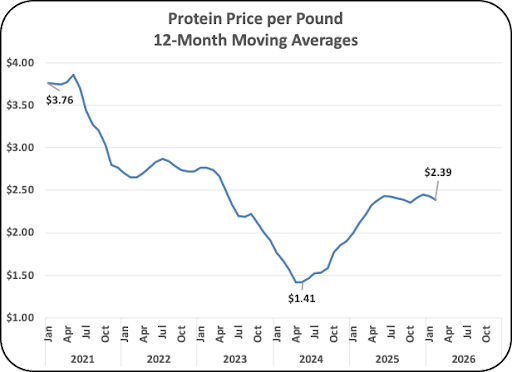
So where does that take the price of milk protein?  Through mid 2025 and into 2026, the value of milk protein as shown in Chart III has maintained a price close to $2.40. per pound.

Chart III – Milk Protein price per Pound

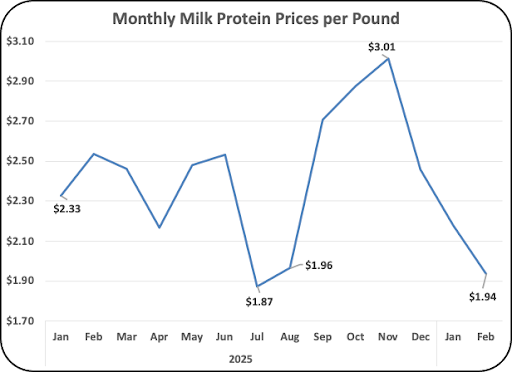
Chart IV shows the recent monthly prices of milk protein.  The most recent price of $1.94 per pound is near to the lowest price in five years.  If the monthly price for milk protein continues near this price, the 12-month trends in Chart III above will begin to fall.

Chart IV – Monthly Prices for Milk Protein

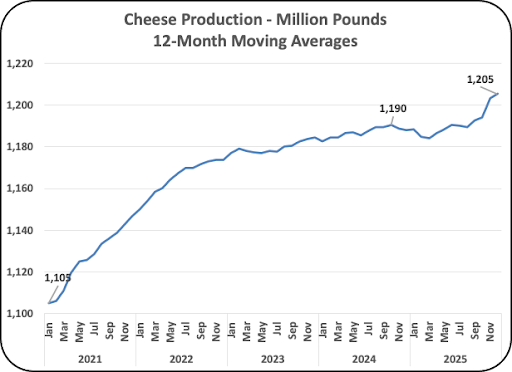
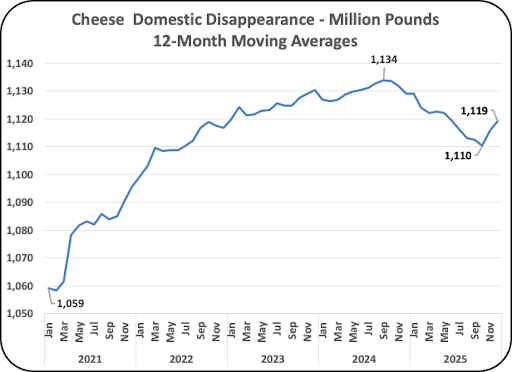
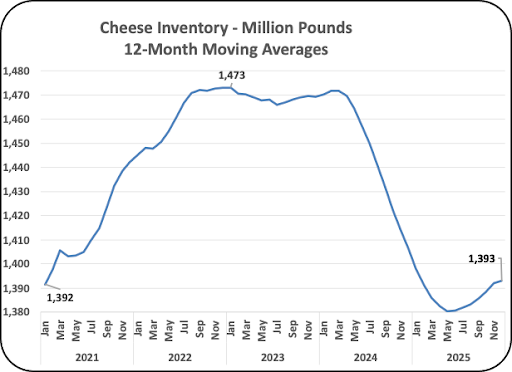
Charts V and VI cover the production and the domestic disappearance of wholesale cheese.  Production is up and domestic disappearance is down.  That would lead to bloated inventories and low wholesale cheese prices, but exports (Chart VIII) have helped keep inventories (Chart VII) at reasonable levels

Chart V – Total Cheese Production
Chart VI – Cheese domestic Disappearance from Wholesale Inventories

The 2025 inventories of cheese are down by 4% from the 2023 and 2024 levels.

Chart VII – Cheese Cold Storage Inventory

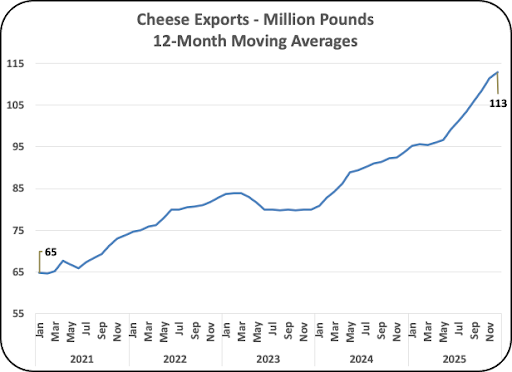
Cheese exports (Chart VIII) have climbed by 74% over the span of this Chart.

Chart VIII – Cheese Exports

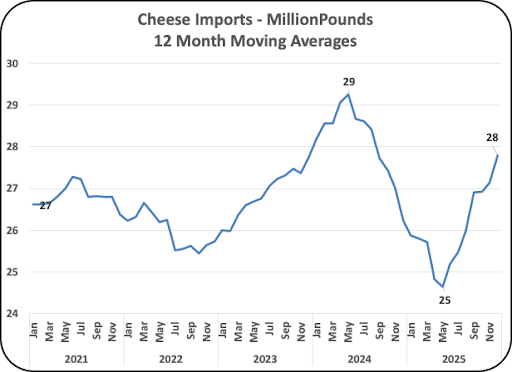
Cheese imports (Chart IX) have also grown but the import levels compared to export levels are only 25% of exports levels. 

Chart IX – Cheese Imports

That would leave net exports at 85 million pounds per month, which is 7% of cheese production.  Cheese and butterfat exports are currently essential to maintain balance in wholesale inventories.

SUMMARY

The analysis of where butterfat and milk protein prices are going is an ugly picture for producer revenue.  Milk production is up and domestic consumption of butter and cheese is down.  Both butter and cheese are now dependent on exports to keep inventories at reasonable levels.  Currently international issues are volatile and this could put pressure on exports.

The financial impact of this will be covered in the next post.

Other recent posts are available at this link, and older posts are available at this link.

Subscribe via email

This field is for validation purposes and should be left unchanged.

Get new posts by email:

Cheese

Dry Whey

Cash prices - Butter / Cheese

FMMO Price Announcements

Resources

Blog Archive

The prior post showed that the producer price of butterfat is continuing to fall.  This post will cover the most recent price trends for milk protein.  If both butterfat and milk protein prices are falling, producers will be scrambling for survival.  The protein price is dependent on the wholesale cheddar cheese price and the butterfat price.  When the cheese price goes down, the price of milk protein goes down.  When the butterfat price goes down, the price of milk protein goes up.  The formula for the protein price is listed below. 

Protein Price = ((Cheese Price – 0.2519) × 1.383) + ((((Cheese Price – 0.2519) × 1.589) 

– Butterfat Price × 0.91) × 1.17)

The butterfat declining price improves the milk protein price, however, as shown in Chart I below, the cheese price is also declining which will lower the price of milk protein.  The 12-month moving average price for cheese is at the lowest price since mid 2024.  In January 2026 the monthly price of cheese was $1.40 per pound, the lowest price for any month in the years covered in Chart I.

Chart I – Wholesale Price of Cheddar Cheese

The butterfat price is shown in Chart II below.  Details were covered in the prior post.

Chart II – Butterfat Price per Pound

So where does that take the price of milk protein?  Through mid 2025 and into 2026, the value of milk protein as shown in Chart III has maintained a price close to $2.40. per pound.

Chart III – Milk Protein price per Pound

Chart IV shows the recent monthly prices of milk protein.  The most recent price of $1.94 per pound is near to the lowest price in five years.  If the monthly price for milk protein continues near this price, the 12-month trends in Chart III above will begin to fall.

Chart IV – Monthly Prices for Milk Protein

Charts V and VI cover the production and the domestic disappearance of wholesale cheese.  Production is up and domestic disappearance is down.  That would lead to bloated inventories and low wholesale cheese prices, but exports (Chart VIII) have helped keep inventories (Chart VII) at reasonable levels

Chart V – Total Cheese Production
Chart VI – Cheese domestic Disappearance from Wholesale Inventories

The 2025 inventories of cheese are down by 4% from the 2023 and 2024 levels.

Chart VII – Cheese Cold Storage Inventory

Cheese exports (Chart VIII) have climbed by 74% over the span of this Chart.

Chart VIII – Cheese Exports

Cheese imports (Chart IX) have also grown but the import levels compared to export levels are only 25% of exports levels. 

Chart IX – Cheese Imports

That would leave net exports at 85 million pounds per month, which is 7% of cheese production.  Cheese and butterfat exports are currently essential to maintain balance in wholesale inventories.

SUMMARY

The analysis of where butterfat and milk protein prices are going is an ugly picture for producer revenue.  Milk production is up and domestic consumption of butter and cheese is down.  Both butter and cheese are now dependent on exports to keep inventories at reasonable levels.  Currently international issues are volatile and this could put pressure on exports.

The financial impact of this will be covered in the next post.

Other recent posts are available at this link, and older posts are available at this link.

Subscribe via email

This field is for validation purposes and should be left unchanged.

Get new posts by email:

Cheese

Dry Whey

Cash prices - Butter / Cheese

FMMO Price Announcements

Resources

Blog Archive

New MilkPrice Resources

Check out our resources to learn more from MilkPrice!

The prior post showed that the producer price of butterfat is continuing …

Where are butterfat prices going in 2026?  The answer is Down, Down …

After reading the headline, many readers are probably wondering “Why is this …

The prior posts reviewed the amazing gains in producer productivity.  Increases in …

Latest Blog