
Forms of Dietary Selenium and Drivers of Efficacy: From Genes to Biological Effects

Ensuring the health and safety of people, facilities, products, transportation and the environment is Adisseo’s number one priority. Reinforced action plans have been deployed to guarantee safety, through innovative systems and ongoing awareness-raising activities.

Every day, all employees work hard to achieve the “Zero Accident” objective.

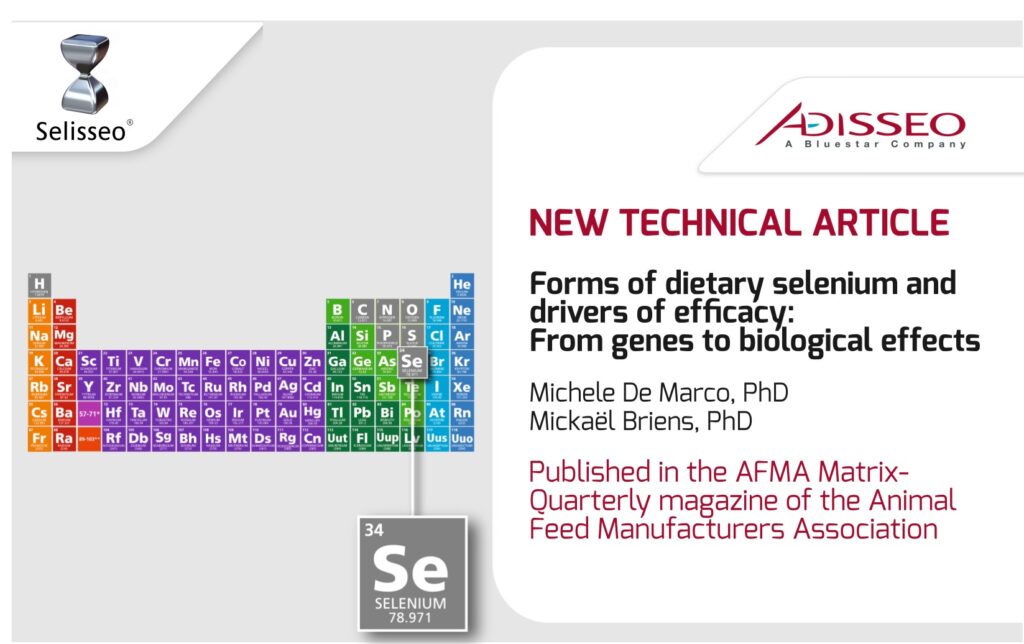
Forms of Dietary Selenium and Drivers of Efficacy: From Genes to Biological Effects

Forms of dietary selenium and drivers of efficacy: From genes to biological effects article banner

AFMA MATRIX 

By Dr Michele De Marco and Dr Mickael Briens, Adisseo

Selenium can be added to livestock diets in either inorganic forms (sodium selenite, SS), organic forms such as Se-yeast (yeast enriched in SeMet), or pure chemically synthesized Se forms such as hydroxyselenomethionine (HMSeBA), L-SeMet or ZnL-SeMet. Recent advances in Se biochemistry have provided a deeper understanding of the principal differences in absorption and metabolism between these forms.

 
There is now much evidence that the SeMet proportions of Se are the main drivers of efficacy in organic form. Selenium, via selenoprotein expression, is involved in the protection against oxidative stress and the regulation of various cell functions. Therefore, increased muscle reserves of Se can enhance livestock resistance to stress and diseases.

More on biological effects of Selenium in its optimal: Download PDF to learn more.

Latest Podcast Episodes