



CLASS I BASE
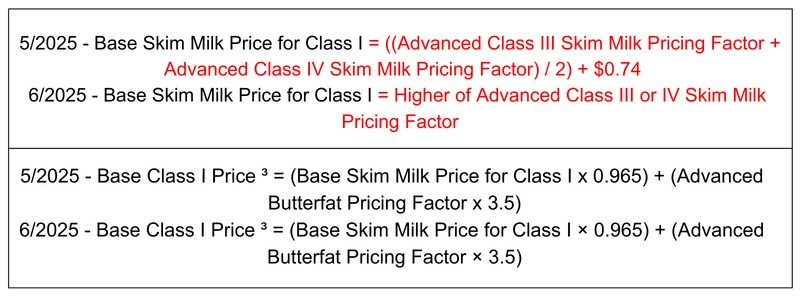
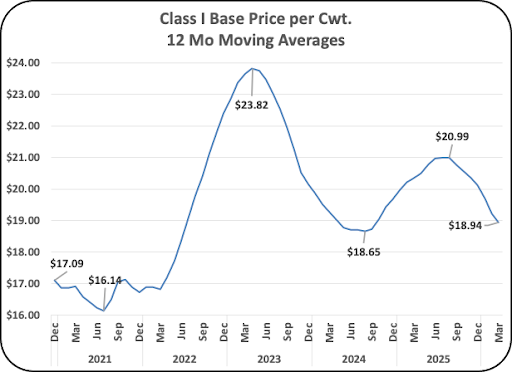
Class I Skim milk price calculations are based on “Advanced Prices and Pricing Factors” for Class III and Class IV milk. The Butterfat, Protein, and Other Solids prices are based on the prior two weeks of the month. Class I Base prices are shown in Chart II and are on a decline in 2025 due primarily to the decreasing butterfat prices.
CLASS II
The Class II skim milk price is a mixture of different formulas with the skim milk part based on the “Advanced Class Prices and Factors”. The butterfat part is based on “Class and Components pricing”.
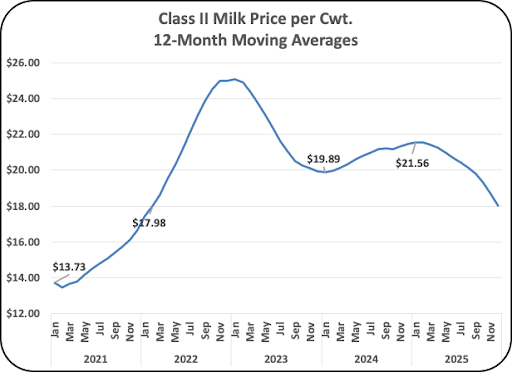
The Class II Milk prices for 2025 (Chart III) show a decreasing price due to the lower butterfat prices and formula price changes made in June 2025.
CLASS III
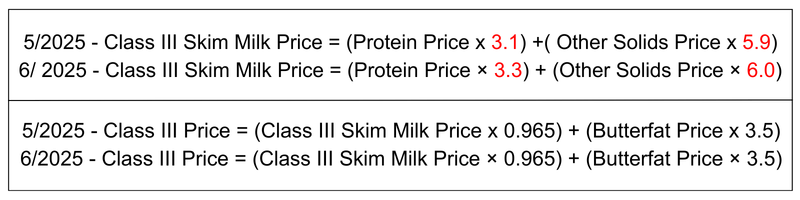
Class III milk is the largest category of milk usage and therefore has the largest impact on milk pricing. The formula changes increased the index price with higher component levels for Protein and Other Solids (See the changes below in red).
That slowed the decline in the index prices slightly. The Class III index price continued to decrease but at a slightly slower rate. In 2025, the index price of Class III milk dropped by 17%.
Class IV
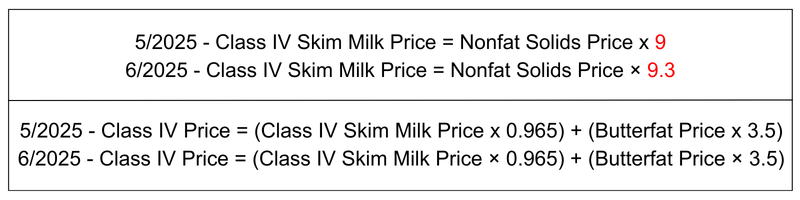
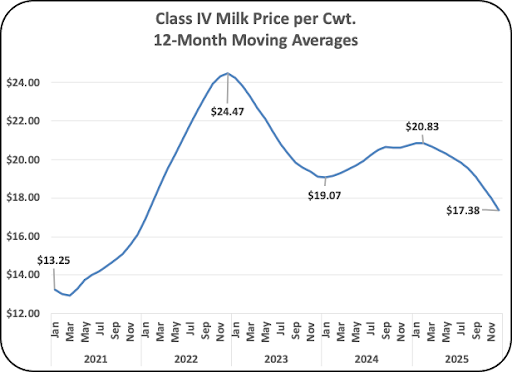
Class IV index milk prices continued to decline in 2025 (Chart V). The new formulas included a larger volume of Nonfat Solids which improved the Class IV skim price (See the changes below in red). However, the decrease in the price of butterfat had a larger impact. Butterfat is still included in the formulas at 3.5% although the actual amount of butterfat is over 4%.
SUMMARY
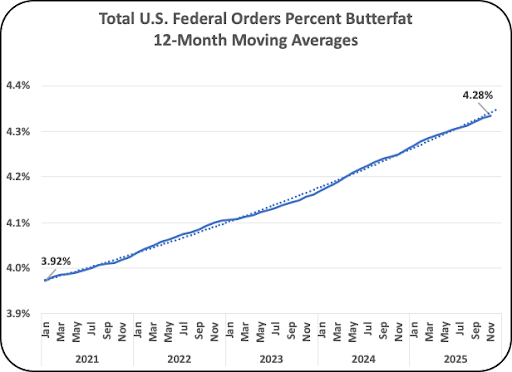
The decreased price of butterfat had a major impact on all classes of milk covered above. The changes in the index formulas increased protein content from 3.1% to 3.3% in Class III and increased the Nonfat solids from 9.0% to 9.3% in Class IV. However, the butterfat content was maintained at 3.5% for all Classes. With a more realistic amount of butterfat in the charts, the milk class prices would be priced much higher.
Yes, it’s complicated
The next post will use the 2025 pricing data to estimate where the prices may be going in 2026. The above index prices do not represent any realistic pricing and will be used only slightly in the 2026 forecast of prices that will be reviewed in the next post.
CLASS I BASE
Class I Skim milk price calculations are based on “Advanced Prices and Pricing Factors” for Class III and Class IV milk. The Butterfat, Protein, and Other Solids prices are based on the prior two weeks of the month. Class I Base prices are shown in Chart II and are on a decline in 2025 due primarily to the decreasing butterfat prices.
CLASS II
The Class II skim milk price is a mixture of different formulas with the skim milk part based on the “Advanced Class Prices and Factors”. The butterfat part is based on “Class and Components pricing”.
The Class II Milk prices for 2025 (Chart III) show a decreasing price due to the lower butterfat prices and formula price changes made in June 2025.
CLASS III
Class III milk is the largest category of milk usage and therefore has the largest impact on milk pricing. The formula changes increased the index price with higher component levels for Protein and Other Solids (See the changes below in red).
That slowed the decline in the index prices slightly. The Class III index price continued to decrease but at a slightly slower rate. In 2025, the index price of Class III milk dropped by 17%.
Class IV
Class IV index milk prices continued to decline in 2025 (Chart V). The new formulas included a larger volume of Nonfat Solids which improved the Class IV skim price (See the changes below in red). However, the decrease in the price of butterfat had a larger impact. Butterfat is still included in the formulas at 3.5% although the actual amount of butterfat is over 4%.
SUMMARY
The decreased price of butterfat had a major impact on all classes of milk covered above. The changes in the index formulas increased protein content from 3.1% to 3.3% in Class III and increased the Nonfat solids from 9.0% to 9.3% in Class IV. However, the butterfat content was maintained at 3.5% for all Classes. With a more realistic amount of butterfat in the charts, the milk class prices would be priced much higher.
Yes, it’s complicated
The next post will use the 2025 pricing data to estimate where the prices may be going in 2026. The above index prices do not represent any realistic pricing and will be used only slightly in the 2026 forecast of prices that will be reviewed in the next post.
The prior post covered volatility in dairy component prices. The protein price …
The prior post covered volatility in dairy component prices. The protein price …
The prior post covered volatility in dairy component prices. The protein price …
The post on September 25, 2026, finished with a comment that the …