


An Overall View of Supply and Demand for Butterfat

An Overall View of Supply and Demand for Butterfat

There is a lot of talk in the dairy industry concerning butterfat.  Some say the U.S. is producing too much butterfat and others say we need to produce more before our supply and demand reaches a balance.  Butterfat is a major ingredient in cheese, butter, and fluid milk.  In 2024 and 2025 some butterfat had to be imported to fill the domestic demand.  This post will examine some of the complex elements that exists.  The data below is based on a mix of solid figures and some estimates.   

Cheese is especially difficult to analyze as there are so many different cheeses.  Cheese makers need to reach a balance between protein and butterfat with a ratio of 8 parts protein to 9 parts butterfat.  The ratio being produced on farms is near 8 parts protein and 10 parts butterfat.  For cheese makers that is too much butterfat, but the growth of butter and whole milk need more butterfat.  The overall management of supplying the component needs of processors is met by moving some butterfat from Class III milk for cheese to Class IV milk for butter.

What is the average butterfat in cheese?  The largest sellers, Cheddar and Mozzarella must have 50% butterfat and 45% butterfat in dry matter respectively.  In this analysis an average of 40% butterfat is used for all cheeses.

Fluid milk is a moving target as whole milk continues to grow, increasing the average butterfat level in fluid milk.  For this analysis, 2.6% average butterfat in fluid milk is used.

Butter” as sold for retail must have 80% butter and some brands have higher butter contents, like many European brands.  This analysis uses 81% butterfat as an average.

Butter production and butter sales have very different annual patterns (Chart I and II below).  This makes month to month changes difficult to use as trends.  Butter production goes up and down with the amount of milk available.  In the cooler months, there is more milk produced and in the warmer summer months, less milk is available. 

The usage of butter is very strong in the fourth quarter with the many year-end events.
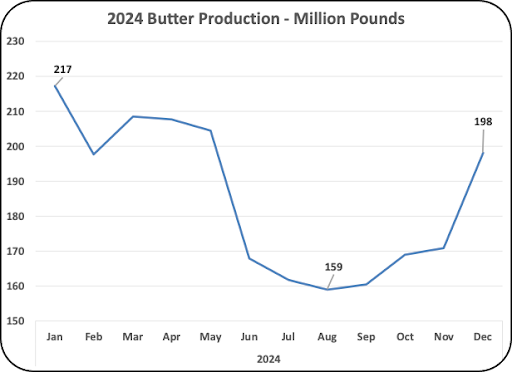
Chart I – Monthly Production of Butter
Chart II – Monthly Disappearance of Butter

Table I below shows the estimated usage of butterfat by product.  Two thirds of U.S. butterfat is processed in cheese.  Only 19% of butterfat goes to butter and 11% is used in fluid milk.  Currently, fluid milk and butter have seen significant increases in volume.  Producers have done a great job of increasing butterfat to meet the higher needs.  (See the prior post.)

Table I – An Estimate of the Average Monthly Butterfat Needs

SUMMARY

A cheese producer would say that the milk their producers are making has too much butterfat.  They are right, as covered above.  But that butterfat has a lot of value and butter churners need more butterfat.  Fluid milk producers have provided excess butter to the butter churners for a long time.  The recent change in the amount of fluid milk consumed should expand that available butterfat.  However, the change to more “whole milk” with more butterfat has reduced the amount of excess butterfat. 


This data in this post indicates that the U.S. needs more butterfat, not less.  To have sufficient butterfat to allow exports and eliminate imports should be the goal.  Analyzing the amount of butterfat in just one Class of milk is not the way to analyze the amount of butterfat that is needed in the total U.S. dairy industry.

Other recent posts are available at this link, and older posts are available at this link.

Subscribe via email

Get new posts by email:

This field is for validation purposes and should be left unchanged.

Cheese

Dry Whey

Cash prices - Butter / Cheese

FMMO Price Announcements

Resources

Blog Archive

There is a lot of talk in the dairy industry concerning butterfat.  Some say the U.S. is producing too much butterfat and others say we need to produce more before our supply and demand reaches a balance.  Butterfat is a major ingredient in cheese, butter, and fluid milk.  In 2024 and 2025 some butterfat had to be imported to fill the domestic demand.  This post will examine some of the complex elements that exists.  The data below is based on a mix of solid figures and some estimates.   

Cheese is especially difficult to analyze as there are so many different cheeses.  Cheese makers need to reach a balance between protein and butterfat with a ratio of 8 parts protein to 9 parts butterfat.  The ratio being produced on farms is near 8 parts protein and 10 parts butterfat.  For cheese makers that is too much butterfat, but the growth of butter and whole milk need more butterfat.  The overall management of supplying the component needs of processors is met by moving some butterfat from Class III milk for cheese to Class IV milk for butter.

What is the average butterfat in cheese?  The largest sellers, Cheddar and Mozzarella must have 50% butterfat and 45% butterfat in dry matter respectively.  In this analysis an average of 40% butterfat is used for all cheeses.

Fluid milk is a moving target as whole milk continues to grow, increasing the average butterfat level in fluid milk.  For this analysis, 2.6% average butterfat in fluid milk is used.

Butter” as sold for retail must have 80% butter and some brands have higher butter contents, like many European brands.  This analysis uses 81% butterfat as an average.

Butter production and butter sales have very different annual patterns (Chart I and II below).  This makes month to month changes difficult to use as trends.  Butter production goes up and down with the amount of milk available.  In the cooler months, there is more milk produced and in the warmer summer months, less milk is available. 

The usage of butter is very strong in the fourth quarter with the many year-end events.
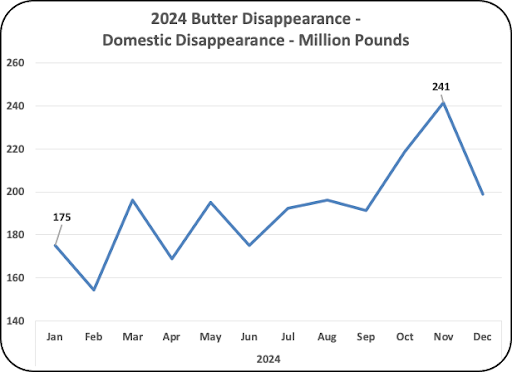
Chart I – Monthly Production of Butter
Chart II – Monthly Disappearance of Butter

Table I below shows the estimated usage of butterfat by product.  Two thirds of U.S. butterfat is processed in cheese.  Only 19% of butterfat goes to butter and 11% is used in fluid milk.  Currently, fluid milk and butter have seen significant increases in volume.  Producers have done a great job of increasing butterfat to meet the higher needs.  (See the prior post.)
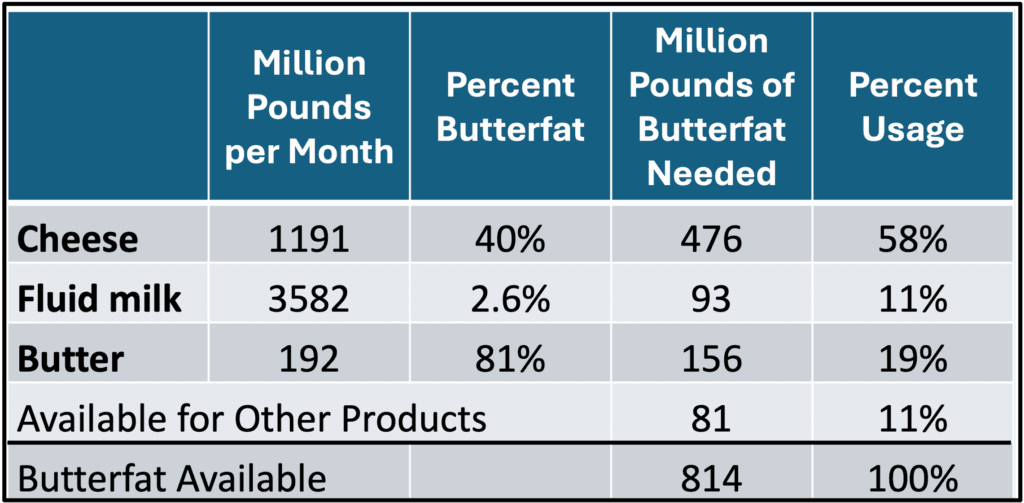
Table I – An Estimate of the Average Monthly Butterfat Needs

SUMMARY

A cheese producer would say that the milk their producers are making has too much butterfat.  They are right, as covered above.  But that butterfat has a lot of value and butter churners need more butterfat.  Fluid milk producers have provided excess butter to the butter churners for a long time.  The recent change in the amount of fluid milk consumed should expand that available butterfat.  However, the change to more “whole milk” with more butterfat has reduced the amount of excess butterfat. 


This data in this post indicates that the U.S. needs more butterfat, not less.  To have sufficient butterfat to allow exports and eliminate imports should be the goal.  Analyzing the amount of butterfat in just one Class of milk is not the way to analyze the amount of butterfat that is needed in the total U.S. dairy industry.

Other recent posts are available at this link, and older posts are available at this link.

Subscribe via email

Get new posts by email:

This field is for validation purposes and should be left unchanged.

Cheese

Dry Whey

Cash prices - Butter / Cheese

FMMO Price Announcements

Resources

Blog Archive

New MilkPrice Resources

Check out our resources to learn more from MilkPrice!

How to manage the Increase in butterfat is a prime topic.  We …

The dairy industry is amazing in advancing technology to keep production profitable …

Retail inflation of the major dairy products was covered six months ago …

There is a lot of talk in the dairy industry concerning butterfat.  …

Latest Blog